

If you’re like most teams, you want more conversations.
- More booked meetings.
- More follow ups that actually happen.
- More chances to turn curiosity into real revenue.
However, what you often get instead is a whole lot of waiting.
- Waiting for a lead to call back.
- Waiting for someone to reply to a proposal.
- Waiting for a customer to notice that renewal reminder buried in their inbox.
Inbound support has its place, but it only captures the people who raise their hand. If a business wants predictable growth, it needs a way to reach out before interest slips away.
That is where an outbound call center can come in to save the day. It takes all those missed touchpoints and turns them into actual conversations.
Let’s break down how it works, why it matters, and how NetCarrier helps teams run outbound outreach that feels smooth, scalable, and easy to manage.
Inbound vs. Outbound Call Center Software: Two Different Jobs, Two Different Outcomes

Inbound call centers are the safety net. Customers or prospects reach out with a question or issue, and the team responds. It is valuable. It is necessary. It is also reactive.
An outbound call center operates differently. The team does not wait for someone to take the first step. They take the lead, reaching out to warm leads, existing customers, past opportunities, and anyone who needs a nudge to keep moving forward.
A few everyday examples:
- Following up after someone downloads a guide or attends a webinar
- Checking in on a quote that has gone quiet
- Calling back leads that filled out a form but never answered the first time
- Reminding customers about renewals, appointments, or deadlines
- Reengaging accounts that have not purchased in a while
When outreach is structured and consistent, conversations pop up that might never happen on their own. That is the heart of outbound. It builds momentum where inbound alone cannot.
Why an Outbound Contact Center Solution Is a Growth Multiplier

Outbound call center solutions work because they close the gap between interest and action. Prospects often mean to respond. Customers often intend to follow up. Then life gets in the way.
A simple call changes that.
An outbound call center solution pulls the conversation back into motion and, when done well, feels helpful rather than intrusive. It also delivers something sales and marketing teams crave: control. Instead of waiting for activity, the team creates it.
Outbound calling software strengthens sales and marketing in a few important ways:
1) It speeds up the entire sales cycle
The timing of a follow-up call has a direct impact on conversion. In fact, a study from HubSpot found that responding within an hour increases lead qualification rates by an average of 36 percent. Having an outbound contact center solution in place allows teams to initiate that timing instead of hoping for it. A single well-timed call can save a deal that might otherwise go cold.
2) It produces cleaner insights
Outbound is not just outreach. It is real-time market research. Every call creates useful feedback:
- Which audience segments respond fastest
- What messages feel compelling
- Where prospects get stuck
- How interest shifts over time
These signals help sales leaders target better and help marketing refine campaigns to increase customer engagement. Outbound makes guessing unnecessary because the data comes directly from conversations.
3) It stabilizes the pipeline
Most pipelines stall for the same simple reason: no one followed up soon enough. Outbound programs prevent those gaps. Teams stay ahead of customer questions, proactively re-engage warm leads, and gently revive older opportunities that still have potential.
Instead of chasing activity, the team creates it.
Short on time or staff to manage every follow up? NetCarrier makes it easy! With ConnectSmart outbound campaigns, the timing, reminders, and next steps all run automatically so your reps can concentrate on the calls that actually move deals forward.
Who Gets the Most Value from Outbound Contact Center Software?
Outbound contact centers help almost everyone, but the strongest wins often show up in:
- Service businesses depend on reminders, confirmations, and quick check-ins to keep schedules full. Outbound calls reduce no-shows and strengthen long-term customer loyalty.
- Insurance and financial services use outbound outreach to stay proactive about renewals, reviews, and ongoing client needs. These industries thrive on timely check-ins, not once-a-year conversations.
- Manufacturers and distributors use outbound calls to keep partners updated, confirm reorders, and maintain healthy relationships with buyers.
- Professional services rely on consistent outreach to reactivate dormant clients, support event follow-up, and move prospects further in the journey.
The pattern is the same across all of them: the more consistent the outreach, the stronger the outcomes.
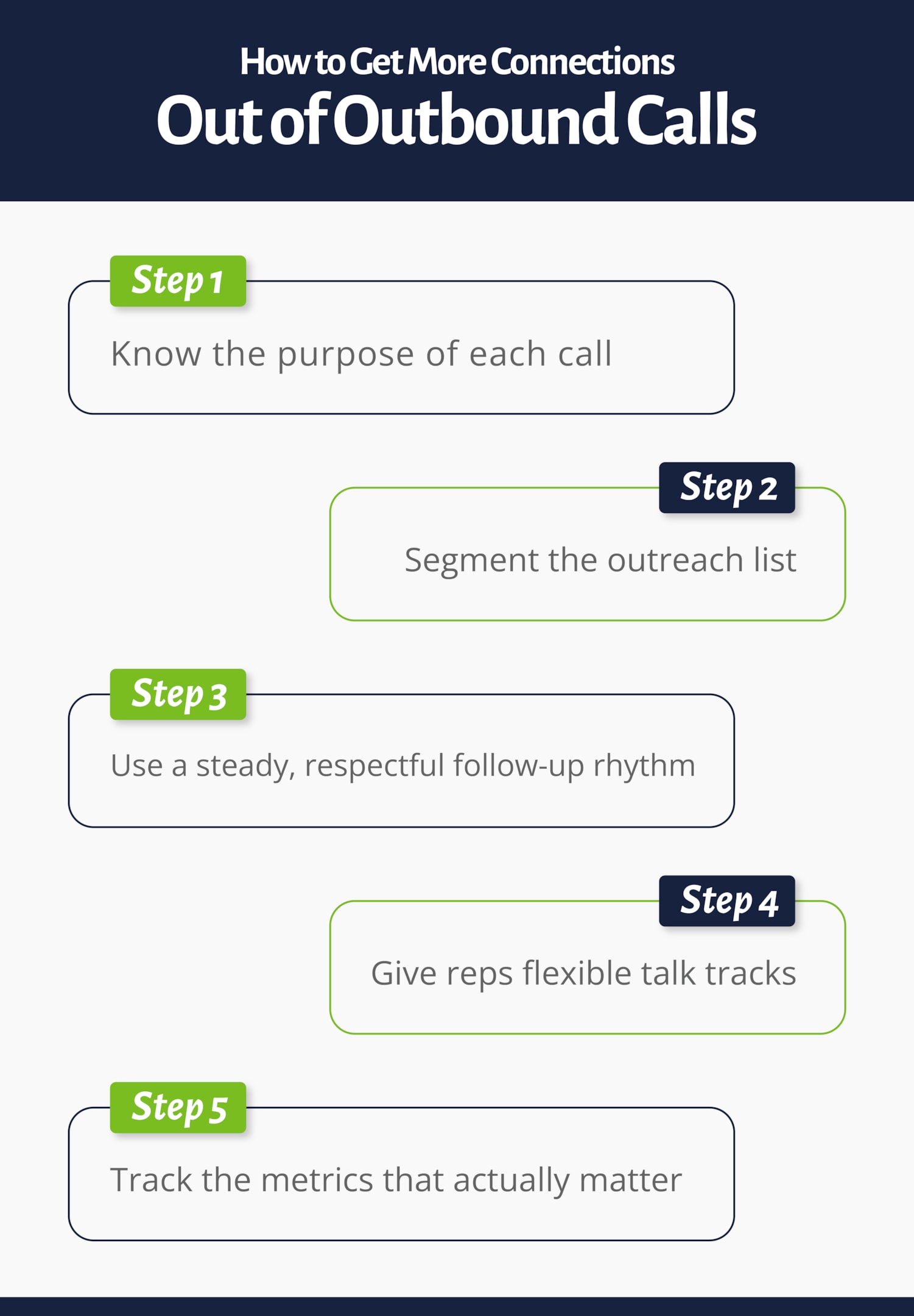
How to Get More Connections Out of Outbound Calls

Even the best outbound call center software could crumble under the weight of a bad outbound communication plan. Because, contrary to popular belief, a successful outbound call center does not rely on scripts or speed dialing.
It relies on a simple, consistent structure. When outreach is steady and relevant, people respond. Here is how teams get more out of every call:
1. Know the purpose of each call
Reps should start every outreach attempt with a clear aim. Are they trying to confirm an appointment? Warm up a lead? Check on a quote? A defined purpose keeps the conversation focused and friendly.
2. Segment the outreach list
Not everyone should get the same message. Even basic segmentation by industry, recent activity, or customer type makes outgoing calls more relevant and boosts the chance of having a real conversation.
3. Use a steady, respectful follow-up rhythm
Most people will not answer the first call. That is normal. A good outbound workflow includes a simple cadence of calls, voicemails, and emails spaced out over several days. Consistency matters more than volume.
4. Give reps flexible talk tracks
People prefer natural conversations over rigid scripts. Talk tracks help reps stay on message without sounding stiff, and they allow space for genuine questions and rapport.
5. Track the metrics that actually matter
Outbound teams run best when they track a few key indicators:
- Speed to lead
- Connect rate
- Conversation outcomes
- Follow-up completion
- Conversion rate by campaign
These numbers help leaders make small improvements that add up quickly.
Outbound works best when the approach is simple, human, and reliable. When teams follow a clear rhythm and use insights to guide their next steps, conversations scale on their own.
With NetCarrier’s outbound call center solution, implementing that rhythm will be easier than ever.

How NetCarrier Helps You Scale Outreach Without Scaling Stress
Once your outbound strategy is in place, the next step is making it easy to run every day. That is where NetCarrier brings everything together.
Instead of juggling multiple systems, teams manage both inbound and outbound conversations within a single modern contact center platform, with ConnectSmart AI Voice Automation powering the timing, follow-through, and workflow for each campaign.
In short, we give outbound teams exactly what they need to keep conversations moving:
- Automated call cadences triggered by form fills, events, or follow-ups
- Voicemail drops and reminders handled automatically
- Real-time routing that sends answered calls to the right rep
- CRM syncing and analytics that keep data clean and actionable
- One unified interface for all inbound and outbound activity
The result is simple. Outreach stays consistent. Leads stay warm. Reps stay organized. Leaders finally get a clear picture of what is working.
Outbound becomes something your team can scale without drowning in busywork.
So, ready to grow your outreach without growing your workload? Reach out to our team, and we’ll give you a quote that’s fit for your business and your business goals.

